
Maybe Code-Switching Isn’t the Problem
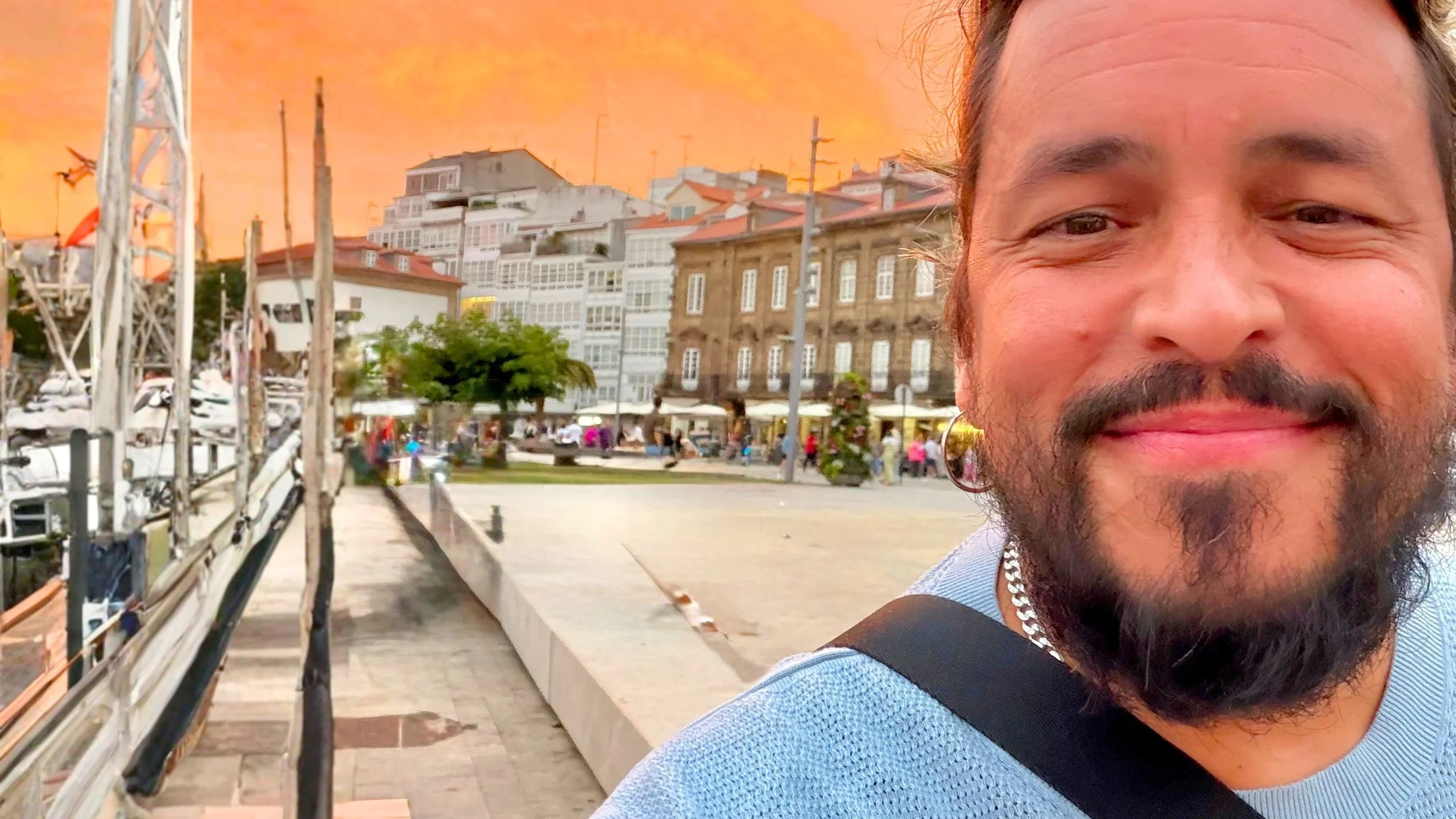
For most of my life, I’ve been really damn good at code-switching. I grew up moving between worlds before I even knew there was a name for what I was doing.
At home? Spanish. Salsa. Puerto Rican rhythms, expectations, humor, food, family.
At school? A completely different set of social cues. On the streets of Chicago? Another language altogether — not necessarily spoken, but read through tone, vibe, posture, instinct.
Then I entered the professional world and discovered — surprise! — there was yet another code.
How you speak. How you dress. How much emotion you show. How much of yourself you reveal. How you make yourself heard without making anyone too uncomfortable. You learn to read the room. And then you learn to rewire yourself for it.
Code-switching gets talked about a lot as something negative. And there’s good reason for that. When someone feels forced to suppress their identity, soften their accent, straighten their hair, change their vocabulary, hide their culture, or become more “acceptable” to people with power? Yeah. That’s a problem.
Nobody should have to shrink themselves to make somebody else more comfortable. But I’ve been thinking there’s another side to this conversation. Because the ability to move between worlds has also become one of my greatest strengths.
I can sit in a boardroom and talk strategy. Walk onto a documentary set and speak creative. Teach a classroom full of students. Hang with artists. Talk shop with entrepreneurs. Sit at my mom’s table for a café con leche with the Puerto Rican rhythm that shaped me. And none of those Hugos is fake. They’re all me. That’s the distinction I think we miss.
There’s a difference between changing yourself to belong and expanding yourself so you can connect.
One is erasure. The other is range. And range is powerful.
It teaches you to listen differently. To notice what matters to different people. To translate an idea without stripping away its meaning. To find commonality between people who might otherwise assume they have nothing in common.
In my work, that ability has become almost foundational. Storytelling is translation. Leadership is translation. Brand building is translation. You’re constantly taking an idea from one world and helping it make sense in another. That doesn't require becoming someone else. It requires knowing yourself well enough that you can flex without disappearing. That’s the real challenge.
Because adaptability without identity becomes performance. But identity without adaptability can become rigidity. The sweet spot is knowing what in you is non-negotiable — your values, your character, your truth — and becoming incredibly fluent in how you carry those things into different rooms.
So maybe the question isn’t: “Do you code-switch?” Most of us do, whether we realize it or not. Maybe the better question is: “When you switch the code, are you still recognizably you?”
Because learning to speak more than one language — culturally, creatively, professionally, emotionally — doesn’t have to make your voice weaker. Sometimes it’s exactly what gives your voice range.
Adapted from Chapter 6, “The Kaleidoscope of Impact: Leading Through Diverse Ignition,” in
SPARKED: Rebellious Leadership Beyond the Ordinary, available now on Amazon.